

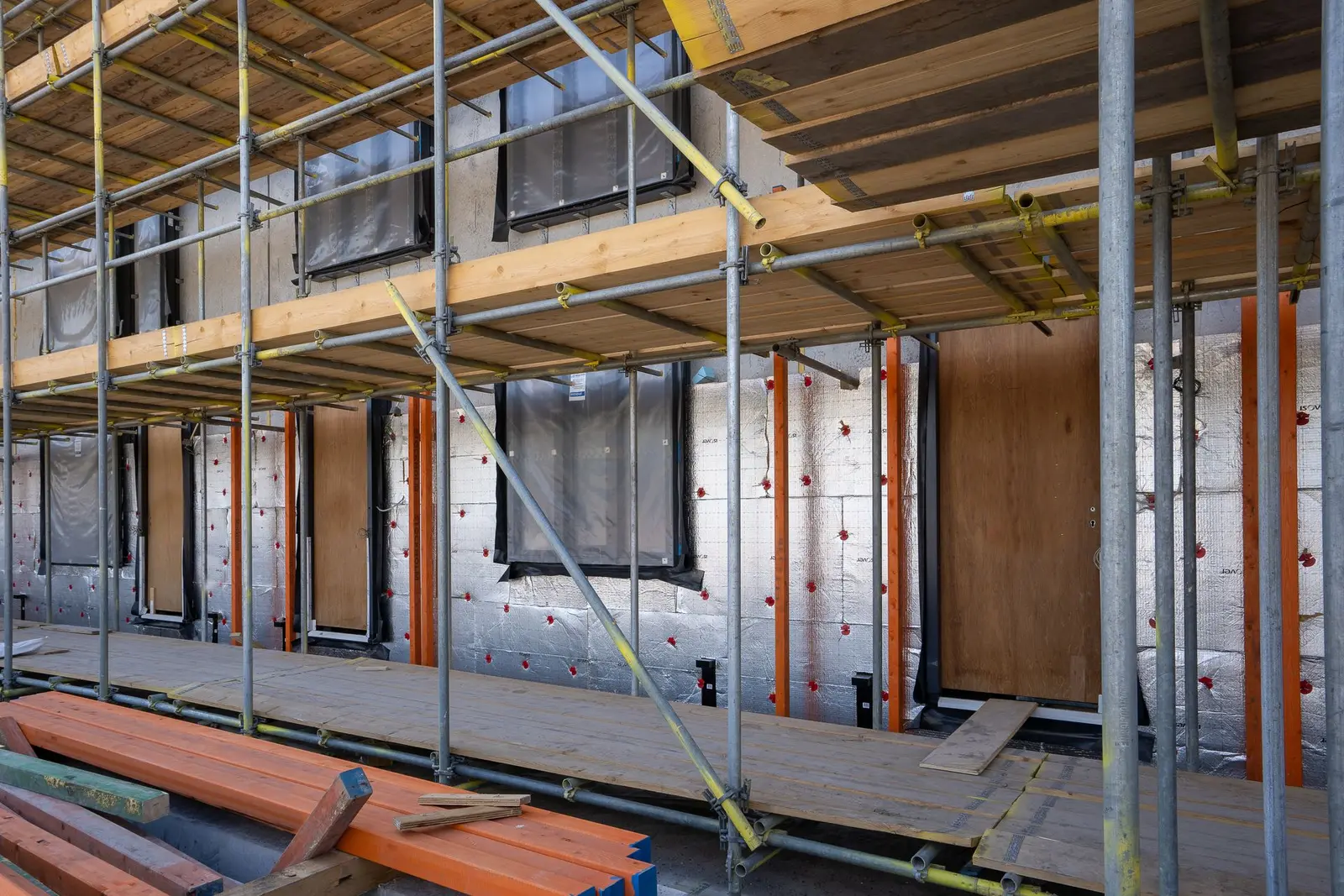
Construction & Leaky Building
A pathway for the claim. A deadline that won't move.
Weathertightness and construction defect claims — the WHRS assessment and Tribunal pathway, the parties who belong in the claim, and the ten-year Building Act longstop that decides whether there is a claim at all.
The WHRS pathway
Leaky-home claims have their own statutory track. The Weathertight Homes Resolution Services Act 2006 gives eligible owners a government-funded assessor's report — establishing what is wrong, what caused it and what repair will cost — before any adversarial step is taken. That report is the foundation of everything that follows.
From there the owner chooses the forum: the Weathertight Homes Tribunal, a specialist body built for these disputes, or the ordinary courts. For most residential claims the Tribunal is the right call — quicker and less formal than court, able to join every responsible party into one proceeding, with determinations enforceable like judgments. Larger or multi-unit matters sometimes belong in the High Court.
The claim itself is bigger than the repair bill: remediation costs on the methodology the evidence supports, alternative accommodation, expert and consenting costs, and general damages for stress and inconvenience in appropriate cases — tempered by betterment and by what the respondents can actually pay.
- Funded assessor's report under the WHRS Act 2006
- Tribunal or courts — the owner chooses the forum
- Tribunal determinations enforce like court judgments
- Claims cover repairs, accommodation, experts and general damages
Read deeper
The 10-year longstop
Section 393 of the Building Act 2004 draws a hard line: no civil proceedings relating to building work more than ten years after the act or omission relied on — in practice usually counted from the code compliance certificate or the completion of the work. WHRS claims sit under the same ten-year limit.
The longstop turns on when the work was done, not when the damage was found. Rot discovered in year eleven is not a late claim; it is no claim. That is the hardest conversation in this area of practice, and the reason the first step on any suspected leak is establishing the dates — consents, code compliance, completion — before anything else.
Lodging the WHRS claim stops the clock, which makes speed cheap insurance: an assessment application filed early protects the position even while the scope of the problem is still being investigated. Waiting for certainty is how claims die.
- s393 Building Act 2004 — ten years, absolute
- Runs from the work or code compliance certificate, not discovery
- Lodging the WHRS claim stops the clock
- Date analysis is the first job on every file
Multi-party claims — councils, builders, developers
A leaky-home claim is almost never against one party. Builders, developers, the council that inspected and certified, subcontractors, sometimes cladding suppliers and non-disclosing vendors — all are commonly joined, with responsibility allocated between them through contribution claims.
Recovery drives the party strategy. Building and development companies from the leaky era are frequently long wound up, so claims often stand or fall on the solvent respondents — commonly the council. For the owner's own claim, each respondent has to be joined before the longstop closes on them individually — which makes early, complete party analysis as important as the technical evidence.
Nearly all of these claims settle at mediation, under the pressure of contribution positions and expensive repair evidence. The ones that settle well arrive with the assessor's report, the costings and the expert evidence already in order — ready for the hearing that will probably never happen.
- Builder, developer, council, subcontractors and suppliers joined
- Contribution claims allocate the blame between respondents
- Insolvent builders make solvent parties — often councils — critical
- Most claims settle at mediation, on the strength of preparation
More about this practice
How we work in construction & leaky building.
Our practice
Leaky-building work is long-standing chambers practice.
We take construction and weathertightness instructions across New Zealand from Whakatipu Chambers in Queenstown — WHRS claims and the Weathertight Homes Tribunal, construction contract disputes, Building Act longstop advice, and multi-party defect litigation for owners and for parties joined to claims.
Everything in Civil & Commercial LawLong-standing WHRS work
We know these claims from every seat.
Weathertightness litigation has been part of Brett Harris's civil practice for years — acting for owners bringing claims and for parties joined into them, in the Weathertight Homes Tribunal and the courts. That both-sides experience matters in multi-party litigation: knowing how councils, builders and their insurers each run their corner is how an owner's claim, or a joined party's defence, gets positioned realistically.
Resolution first
Settled beats litigated, most of the time.
Most civil disputes should settle, and the strongest settlements are negotiated from a position of trial-readiness. We push matters toward mediation and negotiated outcomes where that serves the client, and prepare every file as if it will be heard — because the cases that are ready for court are the ones that resolve on the best terms.
Make an enquiryCommon Questions
Construction & Leaky Building FAQs.
A few construction & leaky building-specific answers. See the full FAQ →
Make an Enquiry
Tell us briefly about your matter and we'll direct your enquiry to the right barrister at Whakatipu Chambers.